

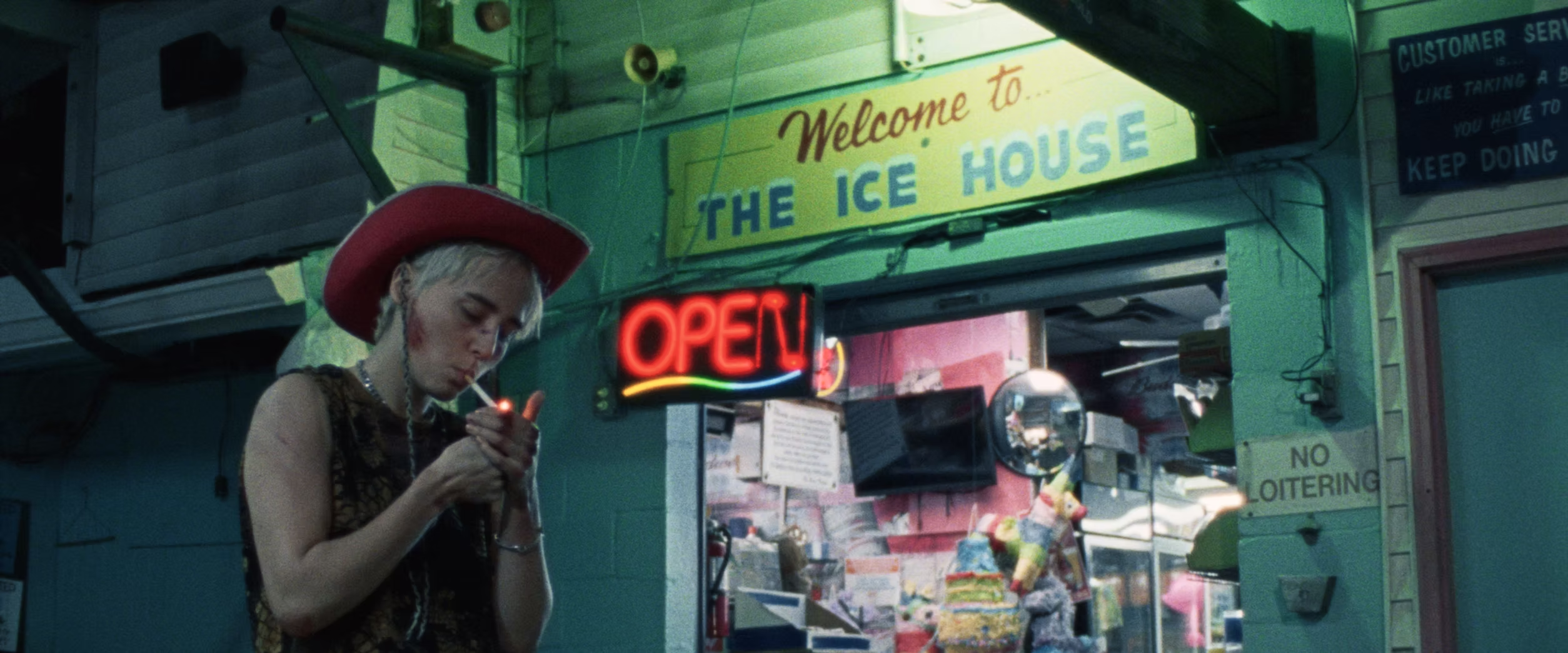
Welcome to Trashtown, USA: A carnival of industrial rot, a mythic America caked in glitter and grime. It’s the dreamscape you wake up in after falling asleep in a gas station bathroom. Sticky, desolate, but alive. Somewhere, a girl in frilly socks with a missing tooth whispers about a curse to a baby lamb. This is where Fucktoys lives, in a swamp of hustlers, lovers, and apocalypse romantics. Our protagonist, AP, drifts through it like a pilgrim searching for a miracle she knows might be a scam. The film is her odyssey, both sacred and sleazy, towards some version of transcendence and resolve. The woman behind it all is Annapurna Sriram: writer, director, star, and the all mighty creator of Trashtown. She built this world out of memory and myth, painting decaying Americana with fragments of her own adolescence, stitched together with the divination of the Tarot.
Annapurna logs onto our video call from New York, a few hours before Fucktoys premieres at NewFest. I’m in Vancouver, where the film had just blown open at VIFF a couple days earlier. There’s a sense that she’s caught in the eye of her own storm: the movie exists now, but it’s hurtling outward faster than anyone can keep up. It’s finding its target audience in droves, inventing new language to describe what it even is. Follow along as Annapurna and I forget (and never really cared) that we’re technically in a work setting. There’s no filter, no PR babysitter hovering in the corner. Just two hoes gabbing about sex work, survival, and the herculean task of making something this raw in a world that prefers to sanitize female art.
THE FOOL — ENTERING TRASHTOWN
ODD: I wanted to start by asking you where your impulse came from to create the world of Trashtown. It’s so gross, but it’s so idyllic.
AP: I knew I wanted to capture the whimsy, absurdism, beauty, and femininity of the south and what the world looked like when I was young. Things are so heightened when you’re a teenager, so the world itself—before things got hard—felt very nostalgic to me. There’s also this element of attachment to that era of my life because I was sent away at sixteen to go to a “bad kid school.” So I think it’s this attachment to the world before I was sent away.
I went to highschool in Nashville, Tennessee. We would explore this abandoned barn behind the school, we would sneak into these party houses, and go to punk shows. We would go and take emo pictures on a train track, you know? It was a very MySpace-infused time. The movie is a bit of a reflection of my memory of being a teenager, in the south, in the Y2K era, Before all of this gentrification and development happened, where small towns really could feel like small towns, and in this pre-addicted to your phone era. That’s like one part of Trashtown. The other part comes from my love of European cinema, French cinema, Giallo, European New Wave, and even Bollywood. They all have this departure from reality and into surrealism. Like in a Bollywood film, they’ll just randomly be in a field singing, not even in India, it looks like the Alps. So I just gave myself permission to let the world not have to be real.
[Listening to AP talk, it clicks. Trashtown runs on intuition, not realism. Everything in it moves like a Tarot card draw: symbolic, improvised, and a little doomed.]
ODD: You said at the VIFF Q&A that if someone found Fucktoys in a time capsule, they wouldn’t know what time period it’s from. That’s a very accurate way to describe it. It doesn’t look or feel modern, but there’s themes and interactions that are so grossly modern that it’s almost hard to watch. What was the first image that came to your head when you decided to create Trashtown?
AP: I was exploring around New Jersey and I found this place that just had this industrial and picturesque vibe. I don’t even know how to explain it. It was just this industrial tower in the water that had these planks on it. I was like, what is this place? It’s kind of beautiful, but it’s also like, what the fuck? Like that is Trashtown.
ODD: That’s kind of how I view America, as a Canadian.
AP: Exactly, like we took this beautiful place and we were like, let’s just throw some shit on here.
Other than that, the scene in the pink motel room was an initial image I had. It was really vivid and based on these real moments and interactions I had with that person. There was this very dreamy quality to it, and it was really funny to me. And I’ve never seen this type of intimate type of transactional relationship play out on screen.

THE LOVERS — FLESH, FAITH, AND FILTH
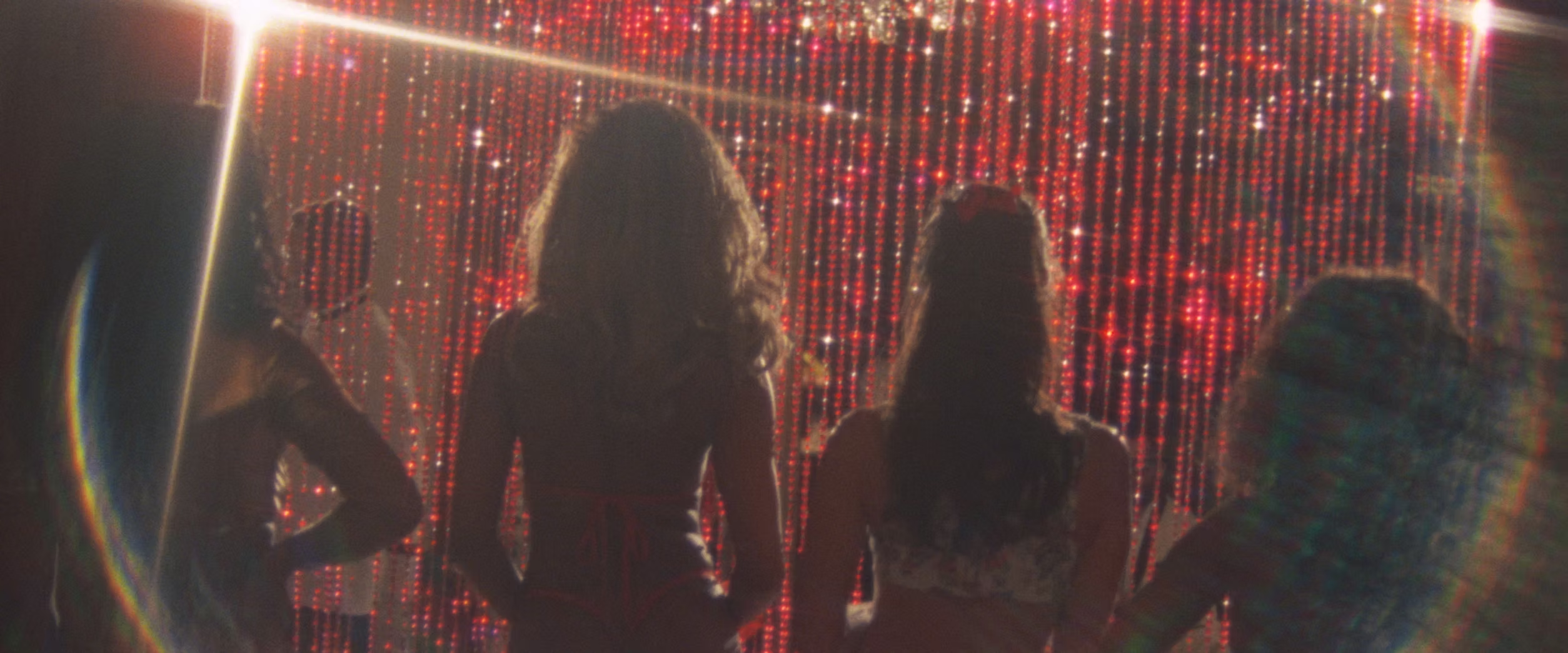
ODD: The way you portray sex work in the film is so rare and so important to me and to so many people. You show many sides of the spectrum as well. Like with Robert, a safe client you can turn to and feel comfortable with. Then there’s James Francone—which is a fucking incredible name and character by the way—who represents the scary possibilities that could happen with a client.
AP: Totally, he’s a boundary pusher, someone who really makes you feel disposable. Sometimes you have those clients who really make you feel like this is a transaction, we’re done, sign this NDA. I don’t care about your feelings. And that’s such a jarring experience after you’ve just been intimate with someone.
ODD: It’s a very real balance that isn’t often shown. How do you feel about how sex work is portrayed in pop culture right now?
AP: Well, it’s definitely changing. When I was growing up, it was Showgirls, Pretty Woman. Think about Grand Theft Auto, like just running over hookers. There was this attitude in the eighties and nineties, and I would even say still now to some extent, where strippers, sex workers were treated like the butt of the joke, these things you can be violent towards, and it doesn’t matter because they’re sluts and whores. That is very dangerous and very disgusting, especially as we move into the place that we are now culturally where we have OnlyFans and other platforms where there’s so many more people that are doing this because of, basically capitalism, jobs not paying enough to live, so people have to do more to hustle.
Now it’s more common to just sell pics online, or take some shifts at a club, or do a sugar daddy thing. It’s so much more prevalent, so to continue this idea that a sex worker is something to be violent towards or abuse or dismiss or dispose of is actually dangerous rhetoric. It is still perpetuating violence against women and vulnerable people in society. So that’s how I feel.
ODD: And you’re so right.
[When prepping for this interview, I thought about the strange tension in how sex work exists on screen. It’s either sanctified or punished, rarely lived in. For all the noise around “representation,” the only recent portrayal that’s managed to breach the mainstream is Anora, last year’s Best Picture darling. While it certainly was a victory, a legitimizing moment for stories about sex work, it also feels like a reminder that visibility doesn’t always constitute perfect progress. I didn’t plan to bring that up, but the world is small; these conversations always find their way back to the surface.]
AP: It’s funny, I’m actually currently staying at my friend Luna’s apartment in New York, and she was one of the actors in the movie Anora. I haven’t seen the movie, but I used to work at the club where it was filmed. I truly believe that the film was working towards not being violent, but there is still violence against a sex worker in that film. It is also still made by the male gaze. So, you know, I think more than anything, whether it’s about sex work, whether it’s just about existing, we just need more movies made by women. We need to start having other perspectives entering culture because that’s paramount.
THE TOWER — INDUSTRY COLLAPSE & REBELLION
ODD: The problem goes beyond a certain film or filmmaker. It’s a top-level industry problem.
AP: Yes. Where is the industry’s accountability to actually support and champion these stories when they are by real women rather than by a successful filmmaker?
ODD: It has to be in a way that’s comfortable for them to digest, I guess.
AP: Totally. There’s a double standard that I am experiencing and feeling and battling every single day. The juxtaposition between the industry and the audiences is insane to me. After our screenings, I have this flood of young women, young South Asian women, young queer people, young trans people, sex workers, the gamut, come up to me and say ‘your film makes me feel seen, it makes me feel comfortable.’ This is what this film has the power to do and these companies can’t see the value in that. That’s what’s really upsetting to me.
[What Annapurna’s talking about is the double standard she’s living through in real time. Fucktoys hasn’t been picked up for distribution yet—offers, sure, but none that don’t completely undervalue its worth. When you look at the turnout and devotion it’s sparked across this year’s festival circuit, it’s hard to understand why. The film’s been selling out screenings, winning awards, generating cult-level chatter, proving there’s an audience hungry for its chaos. So why is the industry pretending not to see it?]
Here’s the FUCKTOYS Tour highlight reel in case you didn’t know:
☆ SXSW 2025: Special Jury Award Winner ☆
☆ Boston Underground Film Festival 2025: Audience Choice Award for Best Debut Feature ☆
☆Fantasia Film Festival 2025: Silver Audience Award for Best International Feature ☆
☆Vancouver International Film Festival 2025: Audience Award for Altered States ☆
☆ NewFest 2025: Grand Jury Award US Narrative Feature☆
☆ LUSCA Film Festival 2025: International Director Winner ☆
☆ 96% on Rotten Tomatoes ☆
☆ Aggregate of 3.9/5 on LB ☆
AP: It all really highlights how you can hustle your ass off, you can make a movie, you can tour the shit out of that movie, you can sell out screenings, sell out merch, and these companies are still not gonna see the commercial viability of your product because it doesn’t fit a preexisting mold. And to me, that tells me that you’re not long for this world. Sorry!
ODD: I can’t believe no company wants to even capitalize on the success of the movie after seeing the tour de force that’s gone on. I guess they’re just too uncomfortable and puritanical.
AP: They’re poor. No offense. Like, sorry, you’re poor! Their offers are too small. Like, offering us like $20,000 to buy the movie? It’s crazy.
ODD: And what would that say about how you view your art, to sell it for $20k?
AP: Exactly. So it’s really just reckoning with the sexism—I don’t know what it is, I’m gonna assume it’s sexism—of the industry and pushing forward just to keep the movie going. I wish that the work we’re doing could just equate to merit, to a meritocracy basically. But, that’s not the world we live in. That’s the curse, and that’s what the movie’s all about.

THE STAR — ILLUSION, REVELATION & COMMUNITY
ODD: Life imitates art, I guess. In the film, as you watch AP search for this miracle to break the curse, you start to get the idea that it’s probably not gonna work out. It’s probably a scam. And there’s something very American about having the hope that you’re gonna fix your problems by hustling or by working hard. Did you think of the movie, of Trashtown, as a critique of that American dream?
AP: That’s funny. To us, it’s just a dream because we’re American.
ODD: Sorry. That sucks.
AP: No, it’s funny. We’re so delusional. We’re in the American Delulu, let’s call it that. We’re in it. I’m in it. There was like this recurring feeling I had that there must be something working against me. I always think the next job I have, role I book, film I make, will be my golden ticket.
Maybe there is a curse. Maybe I’m sabotaging myself. Maybe there’s like a hex on me. This is the inner monologue that I had before I wrote this movie.
Then I had moment in my late twenties where I was like, wait, there’s no fucking curse. This is sexism. This is racism. This is transphobia. These are structures of oppression. I’m dealing with this very real reality of people not taking me seriously or dismissing me because I’m not presenting as a cis white boy. And that was one of my intentions with Fucktoys, to try and break down all of that shit, and have all of these minorities in the film that don’t get cast because of heteronormative and whitewashed ideals. And they don’t have to explain themselves, they just get to fucking exist.
ODD: To have both Dani and AP exist in a film is a miracle, let alone as love interests. Did you know how impactful that that was gonna be to audiences?
AP: Honestly, no, I didn’t. With Sadie Scott (who plays Dani), definitely not to this extent. The trans community has always been under fire. But at the time when we were shooting, they were not being listed as terrorists like they are right now. I could never have predicted how impactful it would be for the trans community to have Sadie in the movie and like, given what’s happened politically since this film came out. I am overwhelmed and so proud of Sadie and so proud of all the trans people that come out to the film and see the community that’s born out of it.
As I’ve been touring this film and there’ve been these huge crowds, the more I think this is actually how we save culture. Cinema too, sure, but what we’re also doing is putting all of these people in a room together and we’re saying, “Here’s your community, you aren’t alone.” We can go to all of these small towns and bring all of these people together like a church, like the Church of Trash or the Church of Smut. That’s what religion does, they bring all these people together and form a little cult. So I’m hoping this movie can become like a safe space, literally, for people to come together and find other people like them so they can feel like they’re not alone. So we can organize and protect each other.
THE WORLD — DIVINE TRASH
[It’s a rare thing, to end a conversation about smut and salvation feeling genuinely moved. But that’s the trick of Fucktoys, it’s both. It holds the prescient and the profane in the same dirty hand, talking about faith, survival, and community while being silly as fuck the entire time. Before we hang up, I can’t resist steering us straight back into the gutter where all good things begin.]
ODD: So AP, I have to ask, what does being a hoe mean to you?
AP: Being a proud hoe is a state of mind. But at the core of it, it’s that I refuse to feel shame. I reject shame and reject any sort of normative view of sexuality or sexual expression and just try to embrace and love myself and my body.
ODD: If you could pick a film to bill as a double feature with Fucktoys, what would it be?
AP: Grease 2, my favourite movie. It was the unconscious inspiration for Fucktoys.
ODD: If there was a Patron Saint of Trash Town, someone everyone prayed to, who would it be?
AP: John Waters is very close to that. I’m sort of called to live by a What Would John Waters Do ethos. But I also feel like we should pick a girl. Is it Pamela? Is it Anna Nicole Smith? We should just do a pageant. Whoever wins gets to be the patron saint of Trashtown.
ODD: That’ll be the sequel
AP: FuckTWOys.
☆ Thank you to AP for this conversation ☆
Images & Media Courtesy of Trashtown Pictures LLC